How do I find out whether a tree is causing root damage to my property?

How do I find out whether a tree is causing root damage to my property Prince Tree Surgery tree surgeon brentwood essexDo you need a tree surgeon or surveyor to determine whether a tree has become a threat to your home or premises?

I was recently asked the following question:

“Could you please tell me if a tree surgeon alone can make a decision as to whether a tree is causing root damage to a property, or does he have to work along side a construction engineer or surveyor?”

My answer was pretty straightforward:

“It depends on your tree surgeon’s experience! You may be able to find a tree surveyor near you who could do both.”

This is because when it comes to tree work, one size doesn’t necessarily fit all. Just as some plumbers are also qualified to carry out gas work, some tree surgeons have the skills that cross over into a tree surveyor’s remit and vice versa.

What does a tree surgeon do?

A tree surgeon has the skills to carry out a huge range of tree work, to include:

  • Planting
  • Care and maintenance
  • Pruning and branch removals
  • Tree felling
  • Tree health and hazard assessments
  • Pest control

Due to the work involved, a tree surgeon must be physically fit and have a head for heights. Many people become tree surgeons after gaining experience assisting qualified tree surgeons as a ground worker. Ground workers operate chainsaws, grinders and chippers, and clear the area of cut timber as the tree surgeon works. Others undertake an apprenticeship in Trees and Timber.

What does a tree surveyor do?

A tree surveyor, otherwise known as an Arboricultural Surveyor, is qualified to undertake a range of duties. These include:

  • Surveying, managing and maintaining trees
  • Producing site reports
  • Managing trees on construction sites and in relation to planning applications
  • Advising on trees within Conservation Areas or that are part of Tree Preservation Orders

Arboriculturists tend to specialise in one particular area of arboriculture, but in addition to inspection and surveying, a tree surveyor is likely to be fairly knowledgeable about tree preservation and conservation, tree climbing and maintenance, planning, and parks and gardens.

A tree surveyor may be self employed, work for a private company, or a local authority.

And if you’re not sure where to look in your area, a fast and simple way of finding a local, qualified tree surgeon or surveyor is to visit The Arboricultural Association’s website. 

There you will find a Registered Consulant Directory, which provides you with all the information you’ll need.

We hope you found this article on ‘How do I find out whether a tree is causing root damage to my property?’ useful. If you would like to discuss any aspect of this article then please do not hesitate to call Prince Tree Surgery on 01277 229709 or ‘Ask Matt’ a question.
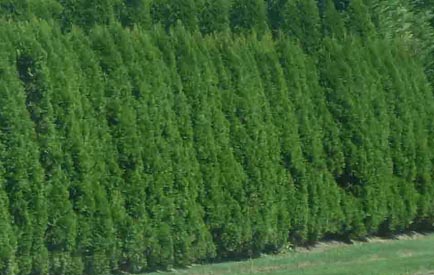
My neighbour’s hedge is blocking my view, what can I do?

Prince Tree Surgery Tree Surgeons in brentwood My neighbour’s hedge is blocking my view, what can I do?

Boundary hedging can make or break neighbourly relations and it’s no surprise that hedging remains one of the biggest causes of disputes.

There are a range of situations in which hedging can cause fall outs. The leaves might be encroaching on next door’s garden or causing slippery surfaces during winter, for examples. The root

s might be uplifting patio areas or damaging pavement.

Many of these situations are tricky to deal with, especially if there’s no protection in law. In order to successfully resolve such disputes both parties need to show a little decorum and be willing to compromise.

However, if your property is being adversely affected by tall hedging there are specific guidelines that hedge owners need to comply with in the interests of fairness to their neighbours.

The law states that anyone with a high hedge must consider the effect it has on their neighbours. Although a homeowner is rarely expected to obtain permission to plant a new hedge in their garden, they are responsible for ensuring it remains within an agreeable height so that it doesn’t block light to the neighbouring property.

Under Part 8 of the Anti-social Behaviour Act 2003, local authorities have the power to exercise control over high hedges. Usually, this function is carried out by a council’s parks team who will investigate formal complaints made by the public over allegedly tall hedges.

Legally, homeowners are expected to have taken all reasonable steps to resolve the hedge dispute amicably with no external intervention before a formal complaint is submitted.

So what is considered a high hedge?

Under the anti-social behaviour legislation, a high hedge is defined as being “so much of a barrier to light or access as”:

My neighbour’s hedge is blocking my view, what can I do? Prince Tree surgery Brentwood tree surgeons Is formed wholly or predominantly by a line or two or more evergreen or semi-evergreen trees or shrubs; and

Rises to a height of more than two metres above the ground

What the legislation is really asking is whether the hedge is made up mostly of evergreen or semi-evergreen trees or shrubs and whether there are two or more trees/shrubs in it which are roughly in line. Most importantly, it requires that the hedge in question exceeds two metres in height and that it acts as a barrier to light or access. 

Homeowners who can answer yes to all the questions have a strong case for complaint under the legislation. For instance, a row of eight conifers extending three metres in height and blocking the living room of next door would be considered a high hedge. If the trees on the other hand were breech trees which lost their leaves in the winter then they would not be considered a high hedge.

The legislation specifically applies to high hedges and not individual trees. Disputes over the height of single trees on private property cannot be resolved by a local authority’s parks team.

I hope you found this article useful. If you’ve moved into a new property which is bordered by hedging, then it is best to approach the owner at the outset to agree expectations. Tackling the issue early in a friendly manner can avoid escalation of problems further down the line. 

We hope you found this article on ‘My neighbour’s hedge is blocking my view, what can I do?’ useful, if you would like to discuss any aspect of this article then please do not hesitate to call Prince Tree Surgery on 01277 229709 or ‘Ask Matt’ a question.

Tree surgeon in brentwood Prince Tree Surgery

Five most common injuries to trees in storm force winds

Prince tree surgeryThe beginning of 2015 might not have brought enough snow to bring us to a standstill locally but hurricane-force winds have inflicted more than enough disruption and destruction for the time being.

Tree surgeons across the country are incredibly busy at the moment dealing with the effects of the gale force winds during last month.

Unfortunately, this has a knock-on effect on the existing workload however at Prince Tree we have a large team of tree surgeons and are able to take on multiple jobs at the same time, ensuring we can respond promptly to our customers – especially during emergencies.

Even if your tree managed to withstand the strength of the winds, which reached 113mph in the north of England, many homeowners will be worried about any long-term damage from snapped branches.

The priority for an arborist will be responding to trees which have fallen across roads and pedestrian routes to make them safe. Nevertheless, we will also be helping homeowners in the weeks ahead to do what they can to treat injured trees to prevent them from premature death.

So how exactly can a storm with the strength of the winds witnessed in Scotland lin December affect the health of your tree?

The list below details the six most common types of storm damage to trees:

Blown over.

Prince Tree Surgery - Tree Surgeons in Brentwood, EssexLarge trees which cannot be righted after being blown over in a storm are unlikely to survive. This is due to the severe damage caused to their root systems and the challenge to get them back into the soil. However, smaller trees including some fruit species could be saved if you act in good time. The risk of a tree being blown over in a storm depends on the health of a tree in the first place. Diseased trees will be more susceptible to damage.

Stem failure.

A tree does not have the ability to heal its wounds but will grow over them to seal them from the external environment. Any wound site will be significantly weaker than the remainder of the tree and can fail more easily during strong winds. They are also susceptible to damage by pests and diseases and quite often it is not the storm damage itself that spells the end of a tree but the following problems from disease.

Crown twist.

Strong winds against one side of a tree’s crown can produce a twisting effect on major branches and the main stem. Over time this twisting effect can right itself with the emergence of new wood however any stem twisting will increase existing weaknesses in the tree resulting in the stem splitting or branches snapping.

Root failure.

Prince Tree Surgery brentwood essex tree surgeonsTree roots provide anchorage for a tree and the primary roots growing from the bottom of the stem plays an important role in keeping it upright as well as extracting water and essential nutrients for growth. If roots are constrained or damaged, this can place additional stress on the roots and in the event they are pulled they are likely to lean or fall.

Branch failure.

Branches are secured to the stem by a small layer of stem wood called the branch collar. Hurricane winds can place the branch collar area under significant and unexpected stress, leaving the branches unprepared and at risk of tearing or snapping. This situation can be rectified with careful repair and maintenance work.

If you were one of the areas affected by the storms last month and December, don’t automatically assume your tree escaped any damage just because it’s still standing. Seek a professional opinion to ensure there is no disease threat or weaknesses which need attention.

As a tree owner, it’s your responsibility to make sure any trees you own are safe and will not injure people or property. A storm can significantly weaken a tree and it’s your duty to provide adequate preventative care.

If you would like to discuss with us in more detail a particular tree you may have a concern with, then please do not hesitate to contact us here on 01277 229709.

Prince Tree Surgery - Tree Surgeons in Brentwood, Essex

What is tree grafting?


What is tree grafting? Prince Tree Surgery tree surgeons in BrentwoodWhat is tree grafting? 

Grafting is the broad term used to describe various techniques whereby the tissues of one plant are inserted into another. This process helps both sets of tissues fuse together and become one plant. Usually, one plant is chosen for its roots (termed the rootstock) while the other is selected for its stems, flowers or fruits (known as the scion).

Many varieties of trees can be grafted but fruit trees in particular benefit from this technique. Why? Because many varieties of fruit trees including oranges and grapefruit are much more susceptible to disease. Choosing to graft such species with good rootstocks increases their resistance to disease and fungi.

Additionally, grafting is used in a way of optimising growth as some root systems are more suitable to certain soil types or climate than others. An un-grafted tree might encounter more difficulties thriving than one which has been grafted.

Grafting is also used to produce dwarf plants by using special understocks or interstems.

The majority of fruit species are compatible with each other and can be grafted. Grafting will not be successful, however, between plants belonging to different families.

Most nurseries agree that young fruit trees up to the age of five are most suitable for top working. Apple and pear trees can be top worked at any age but those older than 10 are best worked at a higher point. Younger trees need at least 1-2 feet of branch between the trunk and the graft.

Prince Tree Surgery tree surgeons in BrentwoodIn order for grafting to be successful, the tissues of the stock and scion must be kept alive until the graft has taken which is usually over the course of a few weeks. Often the site of the original graft will become a physical weak point as the newly formed tissues fuse and care should be taken in the early stages of the process.

One of the advantages of grafting fruit trees is their ability to produce fruit much quicker than a non-grafted tree. This is because a seedling plant will not need to complete the juvenile phase which typically lasts up to nine years and can instead begin to produce fruit in just two years.

A variation on grafting can be used to repair trees which have suffered trunk damage as a result of rodents or rabbits. In this style of grafting, known as bridge-grafting, the cambium layers above and below the damaged areas are connected to restore the nutritional supply to the tree and give it a new lease of life.

Grafting is usually best tackled in the spring when the buds from the understock trees are just beginning to open. This is usually in April or early May. For help and advice on any tree-related issue including grafting or disease control, give our experts a call.

Prince Tree Surgery

Do tree surgeons work in the rain?

Do tree surgeons work in the rain. Prince Tree SurgeryDo tree surgeons work in the rain?

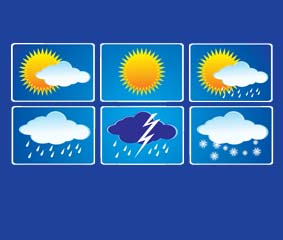
Tree surgery is a hazardous profession at the best of times and entails considerable danger however adverse weather of any kind can increase this risk. So do tree surgeons work in the rain?

The health and safety of our tree surgeons and customers is a top priority for Prince Tree Surgery and so if bad weather is likely to affect the ability of our employees to undertake their work in the proper manner, then a decision will be made to curtail work until the weather improves.

Tree surgeons do they work in the rain Prince Tree SurgeryGenerally, our tree surgeons will make a decision on whether it is safe to work on the day the work is due to take place. If the weather is damp but not raining – or raining lightly with a chance of clearing up – then work will go ahead as planned. Similarly, if there are intermittent downpours but some periods of dryness then generally we will perform all ground-based work such as hedging and felling as normal.

If the downpours are continuous and there is little chance of the weather clearing then most tree surgeons will postpone any work. Some will carry out hedge trimming or finish off jobs that don’t require any climbing but any work which involves limb walking or significant technical skills will definitely be abandoned.

Snow 

As weather conditions go, snow is one of the most disruptive to tree surgery businesses as it’s too dangerous to climb and too cold to operate handheld tools effectively. Clearing up is also impossible due to ground level snow cover. In these situations, we only ever perform emergency work.

Strong winds or gales 

Strong winds or gales are equally as troublesome for business as again the conditions are too risky for most tree surgery duties.

Lightning 

In the event of lightning, all climbing and limb walking must stop for obvious health and safety reasons.

The unreliable British summer can disrupt tree surgery work but we will do what we can when we can to complete jobs on time. In the unlikely event that the forecast is clear and it’s hot and sunny, all we need is a nice cup of tea to get us started!

Will a lightning strike instantly kill my tree?

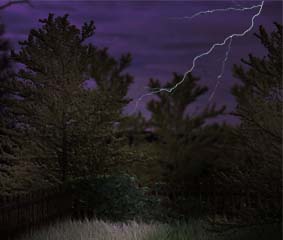
Nature is unpredictable and severe weather often poses the biggest threat to trees. The temperature of a lightning flash can be 30,000C – five times hotter than the sun – and it doesn’t take a tree expert to realise this can inflict significant damage.

But some trees can and do recover from such an injury, the problem for tree surgeons is predicting the extent of the damage. And the future life expectancy.

The ability of a tree to withstand a lightning strike very much depends on the species and moisture content. It also depends on the health of the tree to start with. A healthy tree should be able to cope with such an injury better than one already suffering disease or decay but the intensity of the strike will be the deciding factor.

A tree can be killed instantly by a lightning strike or significantly weakened.  Anything tall including buildings and statues are at risk of lightning damage. But trees are a common victim because of the moisture they contain within the tissues inside the tree bark. This makes them much better conductors of electricity.  The electrical current places the tree’s inner cells under intense heat which can cause the drier bark on the outside to explode off in large chunks.

Will a lightning strike instantly kill my tree? Prince Tree SurgerySome species are more prone to lightning strikes than others. These include the sequoia, poplar, cedar, and Douglas fir. Some trees can explode from core and some suffer a longer split down the trunk.

The damage can sometimes be lessened if the outside of the tree is rain soaked as the current may instead be limited to the outside of the trunk. However, severe lightning bolts have split trees in two and caused them to set fire from the inside.

Any tree which has been struck by lightning should be assessed to ensure it is still safe and doesn’t pose a threat to anybody. This examination should only take place once the storm has subsided and there is no threat of further lightning. More people are struck by lightning close to trees or water than anywhere else.

A qualified tree surgeon will be able to safely assess the safety of the tree. Any jagged or insecure branches will be removed immediately and the appointed tree expert will be able to determine the general health of the tree.

It is very difficult to determine how well a tree will fight back from a lightning strike and sometimes a ‘wait and see’ approach is the only option. Injured trees will be more prone to insects, disease and decay so while they might initially survive the lightning strike, the damage could worsen as the months or years go by.

Any tree which is immediately dangerous to people or property should be removed instantly.

It is possible to protect historic trees or trees which are close to properties by implementing a lightning protection system. Such a system uses copped conductors which are linked to a ground rod to route any electrical charge to the earth where the energy is dispersed. This reduces tree damage and the possibility of side flashes. This is a situation where lightning jumps from a tree to more conductive materials on a property close by.

Brentwood Tree Surgeons Prince Tree Survery

My property lies under an oak tree, how do I persuade the landowners to carry out safety checks?

Prince Tree Surgery

Trees bring huge health benefits and aesthetic value to our homes and quite rightly feature in most new property developments. But they also bring their fair share of problems and it’s worth ensuring any new home you purchase is not adversely affected by tree root growth or is at risk of damage from falling branches.

As a tree surgery business, we’re often asked for advice from homeowners whose property is affected by a tree owned by a third party. A common example is a property set within private parkland or one that lies close to land owned by a local authority. The law is very clear that the responsibility of ensuring a tree is safe and poses no risks to people or property lies with the landowner, however, in reality not all landowners are keen to undertake necessary safety checks, leaving the homeowner in a tricky situation.

Unfortunately, living directly under or in close proximity to a tree is always going to carry an element of risk. No tree is ever 100% safe however with regular inspections and maintenance pruning you can reduce the risks and begin to enjoy being at such close encounters with nature again.

My property lies under an oak tree, how do I persuade the landowners to carry out safety checks? Prince Tree SurgeryThe best way of ensuring the health of a tree is to carry out a tree survey. This must be carried out by a professional, fully-insured arborist who will look in detail at any possible disease or decay that could render the tree a risk. The landowner is responsible for covering the cost of such a survey however it’s not always possible to gain their consent for such a measure. In such circumstances, a property owner should write to their local council explaining their concerns about the health of the tree as they will be able to follow up the complaint on their behalf.

The Local Government (Miscellaneous Provisions) Act 1976 – Sections 23 & 24 (Dangerous Trees) gives local authorities powers to take action in respect of trees which are thought to be dangerous and are not owned by the council. The legislation is usually a last resort if the owner refuses all previous appeals to tend to the dangerous tree and is only used in cases where there is thought to be imminent danger to people or property. In such circumstances, a council can serve a notice on the tree owner requiring specified work to be completed within a certain timescale. If the work is not carried out, the council can do the work itself and charge the tree owner directly.

In situations where a tree doesn’t pose imminent danger, the council has limited powers. It can write to a tree owner expressing concern and use the law to investigate the tree, but will only be able to take enforcement action in cases where the tree is extremely dangerous.

For peace of mind, many homeowners arrange for a tree survey to be carried out themselves and ensure that any correspondence or reports are forwarded to the tree owner. By refusing to carry out any recommended works, the tree owner is making themselves liable for subsequent damage/personal injury claims should the worst occur.

If you would like further information about the risks of living under or close to a tree, we are more than happy to help.

My property lies under an oak tree, how do I persuade the landowners to carry out safety checks?

Health and safety, we go beyond the minimum requirements

Health and safety, we go beyond the minimum requirements

Tree surgery or arboricultural work is one of the most hazardous professions in the world.  It exposes its workers to risks of injury or even death every day.

One look at statistics published by the Health and Safety Executive conveys the scale of the dangers facing tree workers:

In the past decade no fewer than 24 tree surgeons have been killed.
Another 1,400 injured while on the job.

The main causes of injury have been chainsaws, falls from height and being struck by falling timber or trees.

To mitigate against such perils, tree surgery businesses need to take a robust approach to health and safety to protect their staff and ensure they have access to the best training and protective equipment to perform their job safely.

Here at Prince Tree Surgery, we take the safety of our tree surgeons extremely seriously.

We go way beyond the minimum requirements laid out by health and safety law to safeguard our workforce.

We have recently sent every one of our tree surgeons on a pioneering health and safety course developed by arborists for arborists to arm them with the best safety skills in the industry.

The training, provided by experienced arborist safety providers Arb Aid, is based around Arb Aid’s unique Trauma Kit. An advanced first-aid kit specially-designed to tackle the kind of injuries commonly experienced by tree surgeons. Including chain-saw wounds, falls from height and crush injuries.

The kit includes a Personal Location Beacon – a device which alerts emergency rescue workers to a tree surgeon’s exact location following a fall or catastrophic accident.

This is especially important given that tree surgeons often work in isolated forests with little mobile phone signal and few landmarks to guide emergency workers.

The course provided training on the contents of the first aid kit and techniques for dealing with:

  • Silky cuts
  • General cuts
  • Scrapes
  • Sawdust in the eyes
  • Thorn removal
  • Splinters
  • Burns
  • Breaks
  • Sprains

The training also covered various forms of bandage application including compression bandage techniques, self-bandaging and self-rescue instruction.

Following their successful completion of the training, our tree surgeons are now armed with the advanced knowledge and skills needed to ensure they are able to deal with an incident promptly and safety should it occur.

The advantage of this specific training is the fact it has been developed by experts within the industry. It covers the scenarios any tree surgeon could find themselves in.

We remain fully committed to the ongoing training of our employees, ensuring they not only have the right tools for the job but have the necessary skills to protect themselves and others.

You’re in safe hands when choosing Prince Tree Surgery. 

What is the difference between trees and shrubs?

At Prince Tree Surgery we are often asked what the difference is between trees and shrubs. The answer is more straightforward than you may think and is easiest to explain by defining each of the two species in turn to gain a better understanding of how they differ.

What is a tree? 

A tree can be described as a plant with a shoot system that’s supported by a single woody trunk. They generally have a trunk of at least three inches in diameter, a crown of foliage and a height of 13 feet when mature.

What is a shrub? 

Shrubs differ from trees, they are more inclined to branch nearer the ground and they may have several narrow stems as opposed to a single trunk. The structure is generally less ridged than a tree with a single trunk. The height is generally less than 13 feet and stems less than three inches in diameter.

Does the size dictate whether it’s a tree or a shrub? 

While size can be one way that can help to tell the difference between the two species, this is not the determining factor. Whether it’s a tree, shrub or plant is actually decided when the tree or shrub is just a tiny seed. One thing to note though, as with many things, there are exceptions to the rule. There are some trees, including the Japanese maple and river birch, that can have multiple trunks.

Likewise with shrubs, by training one trunk, it’s possible for them to be shaped into a small tree. However, by following these basic rules it does make it easier to differentiate between trees and shrubs.

How can Prince Tree Surgery help?

Prince Tree Surgery offers a wide range of tree surgery services.  In addition to our tree surgery and tree felling services we are also able to advise and carry out works relating to tree health and ecology, whether tree feeding or habitat protection.

We are also specialists in tree planting, including providing maintenance plans and after care programmes. We can advise on the best options for tree planting that are specific to your needs.