What is tree grafting?


What is tree grafting? Prince Tree Surgery tree surgeons in BrentwoodWhat is tree grafting? 

Grafting is the broad term used to describe various techniques whereby the tissues of one plant are inserted into another. This process helps both sets of tissues fuse together and become one plant. Usually, one plant is chosen for its roots (termed the rootstock) while the other is selected for its stems, flowers or fruits (known as the scion).

Many varieties of trees can be grafted but fruit trees in particular benefit from this technique. Why? Because many varieties of fruit trees including oranges and grapefruit are much more susceptible to disease. Choosing to graft such species with good rootstocks increases their resistance to disease and fungi.

Additionally, grafting is used in a way of optimising growth as some root systems are more suitable to certain soil types or climate than others. An un-grafted tree might encounter more difficulties thriving than one which has been grafted.

Grafting is also used to produce dwarf plants by using special understocks or interstems.

The majority of fruit species are compatible with each other and can be grafted. Grafting will not be successful, however, between plants belonging to different families.

Most nurseries agree that young fruit trees up to the age of five are most suitable for top working. Apple and pear trees can be top worked at any age but those older than 10 are best worked at a higher point. Younger trees need at least 1-2 feet of branch between the trunk and the graft.

Prince Tree Surgery tree surgeons in BrentwoodIn order for grafting to be successful, the tissues of the stock and scion must be kept alive until the graft has taken which is usually over the course of a few weeks. Often the site of the original graft will become a physical weak point as the newly formed tissues fuse and care should be taken in the early stages of the process.

One of the advantages of grafting fruit trees is their ability to produce fruit much quicker than a non-grafted tree. This is because a seedling plant will not need to complete the juvenile phase which typically lasts up to nine years and can instead begin to produce fruit in just two years.

A variation on grafting can be used to repair trees which have suffered trunk damage as a result of rodents or rabbits. In this style of grafting, known as bridge-grafting, the cambium layers above and below the damaged areas are connected to restore the nutritional supply to the tree and give it a new lease of life.

Grafting is usually best tackled in the spring when the buds from the understock trees are just beginning to open. This is usually in April or early May. For help and advice on any tree-related issue including grafting or disease control, give our experts a call.


Prince Tree Surgery

Do tree surgeons work in the rain?

Do tree surgeons work in the rain. Prince Tree SurgeryDo tree surgeons work in the rain?

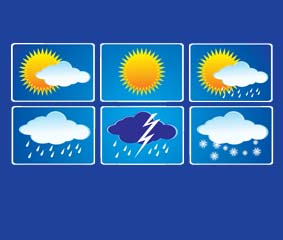
Tree surgery is a hazardous profession at the best of times and entails considerable danger however adverse weather of any kind can increase this risk. So do tree surgeons work in the rain?

The health and safety of our tree surgeons and customers is a top priority for Prince Tree Surgery and so if bad weather is likely to affect the ability of our employees to undertake their work in the proper manner, then a decision will be made to curtail work until the weather improves.

Tree surgeons do they work in the rain Prince Tree SurgeryGenerally, our tree surgeons will make a decision on whether it is safe to work on the day the work is due to take place. If the weather is damp but not raining – or raining lightly with a chance of clearing up – then work will go ahead as planned. Similarly, if there are intermittent downpours but some periods of dryness then generally we will perform all ground-based work such as hedging and felling as normal.

If the downpours are continuous and there is little chance of the weather clearing then most tree surgeons will postpone any work. Some will carry out hedge trimming or finish off jobs that don’t require any climbing but any work which involves limb walking or significant technical skills will definitely be abandoned.

Snow 

As weather conditions go, snow is one of the most disruptive to tree surgery businesses as it’s too dangerous to climb and too cold to operate handheld tools effectively. Clearing up is also impossible due to ground level snow cover. In these situations, we only ever perform emergency work.

Strong winds or gales 

Strong winds or gales are equally as troublesome for business as again the conditions are too risky for most tree surgery duties.

Lightning 

In the event of lightning, all climbing and limb walking must stop for obvious health and safety reasons.

The unreliable British summer can disrupt tree surgery work but we will do what we can when we can to complete jobs on time. In the unlikely event that the forecast is clear and it’s hot and sunny, all we need is a nice cup of tea to get us started!

My property lies under an oak tree, how do I persuade the landowners to carry out safety checks?

Prince Tree Surgery

Trees bring huge health benefits and aesthetic value to our homes and quite rightly feature in most new property developments. But they also bring their fair share of problems and it’s worth ensuring any new home you purchase is not adversely affected by tree root growth or is at risk of damage from falling branches.

As a tree surgery business, we’re often asked for advice from homeowners whose property is affected by a tree owned by a third party. A common example is a property set within private parkland or one that lies close to land owned by a local authority. The law is very clear that the responsibility of ensuring a tree is safe and poses no risks to people or property lies with the landowner, however, in reality not all landowners are keen to undertake necessary safety checks, leaving the homeowner in a tricky situation.

Unfortunately, living directly under or in close proximity to a tree is always going to carry an element of risk. No tree is ever 100% safe however with regular inspections and maintenance pruning you can reduce the risks and begin to enjoy being at such close encounters with nature again.

My property lies under an oak tree, how do I persuade the landowners to carry out safety checks? Prince Tree SurgeryThe best way of ensuring the health of a tree is to carry out a tree survey. This must be carried out by a professional, fully-insured arborist who will look in detail at any possible disease or decay that could render the tree a risk. The landowner is responsible for covering the cost of such a survey however it’s not always possible to gain their consent for such a measure. In such circumstances, a property owner should write to their local council explaining their concerns about the health of the tree as they will be able to follow up the complaint on their behalf.

The Local Government (Miscellaneous Provisions) Act 1976 – Sections 23 & 24 (Dangerous Trees) gives local authorities powers to take action in respect of trees which are thought to be dangerous and are not owned by the council. The legislation is usually a last resort if the owner refuses all previous appeals to tend to the dangerous tree and is only used in cases where there is thought to be imminent danger to people or property. In such circumstances, a council can serve a notice on the tree owner requiring specified work to be completed within a certain timescale. If the work is not carried out, the council can do the work itself and charge the tree owner directly.

In situations where a tree doesn’t pose imminent danger, the council has limited powers. It can write to a tree owner expressing concern and use the law to investigate the tree, but will only be able to take enforcement action in cases where the tree is extremely dangerous.

For peace of mind, many homeowners arrange for a tree survey to be carried out themselves and ensure that any correspondence or reports are forwarded to the tree owner. By refusing to carry out any recommended works, the tree owner is making themselves liable for subsequent damage/personal injury claims should the worst occur.

If you would like further information about the risks of living under or close to a tree, we are more than happy to help.

My property lies under an oak tree, how do I persuade the landowners to carry out safety checks?

What is the difference between trees and shrubs?

At Prince Tree Surgery we are often asked what the difference is between trees and shrubs. The answer is more straightforward than you may think and is easiest to explain by defining each of the two species in turn to gain a better understanding of how they differ.

What is a tree? 

A tree can be described as a plant with a shoot system that’s supported by a single woody trunk. They generally have a trunk of at least three inches in diameter, a crown of foliage and a height of 13 feet when mature.

What is a shrub? 

Shrubs differ from trees, they are more inclined to branch nearer the ground and they may have several narrow stems as opposed to a single trunk. The structure is generally less ridged than a tree with a single trunk. The height is generally less than 13 feet and stems less than three inches in diameter.

Does the size dictate whether it’s a tree or a shrub? 

While size can be one way that can help to tell the difference between the two species, this is not the determining factor. Whether it’s a tree, shrub or plant is actually decided when the tree or shrub is just a tiny seed. One thing to note though, as with many things, there are exceptions to the rule. There are some trees, including the Japanese maple and river birch, that can have multiple trunks.

Likewise with shrubs, by training one trunk, it’s possible for them to be shaped into a small tree. However, by following these basic rules it does make it easier to differentiate between trees and shrubs.

How can Prince Tree Surgery help?

Prince Tree Surgery offers a wide range of tree surgery services.  In addition to our tree surgery and tree felling services we are also able to advise and carry out works relating to tree health and ecology, whether tree feeding or habitat protection.

We are also specialists in tree planting, including providing maintenance plans and after care programmes. We can advise on the best options for tree planting that are specific to your needs.

Is an hollow tree dangerous?

Is and hollow tree dangerous?Is an hollow tree dangerous?

Homeowners naturally become concerned at any visible signs their tree is damaged. While a hollow tree might appear dramatic, it’s not always a cause for concern – in fact many hollow trees have stood and thrived for hundreds of years. However, Prince Tree would always advise you to seek the services of a professional tree surgeon who can make an expert judgement as to whether or not a tree is safe and healthy as the repercussions of ignoring the issue can be fatal.

Decay is part of the natural life cycle of many trees, particularly oak and ash. It takes many years or even decades for a tree to become hollow and although the heartwood (tree centre) is effectively dead, the tree will continue to form sapwood on the exterior of the trunk to create a cylinder. This cylinder can be extremely robust and will provide structural support to the trunk and the canopy above but it depends on the ratio of healthy to diseased tissue.

A hollow tree by itself is by no means an indication of weakness as many are strong and robust if there are no other problems or diseases affecting the tree. Many of the ancient trees we find in woodlands and parks are actually hollow and are perfectly healthy. It is usually younger trees which carry greater risk as they haven’t got the maturity to withstand significant decay and may become weakened as a result. A trained arboriculturalist will assess a tree in its entirety before determining whether it is safe or not.

There are of course times when a hollow tree is considered a danger and the only possible option is removal. Trees become unstable during the final stages of disease and may become more vulnerable to storm damage and high winds. This is when they pose the greatest risk to people and property and tree owners should take urgent action to ensure they minimise the chances of such events occurring.

Can I take action to correct a hollow tree?  

The simple answer is no. Trees which become hollow over time are often healthy and will create their own barriers of protection through the production of bark. A tree only requires the bark and the initial layers beneath the bark to remain strong and healthy. Filling in the hollow of a tree will not increase its stability, in actual fact it could do more harm than good, expanding and contracting at a different rate to the natural process. The general advice is to leave a tree untouched if shows no other signs of distress. Importantly, do not cause any damage to the outer layers of the tree as this will allow the rot to penetrate through to the essential layers.

Homeowners needs to ensure they gain the advice of an expert tree surgeon to determine the health of the tree initially and then follow this up with regular checks to ensure it is still structurally safe.

Prince Tree Surgery - Tree Surgeon in brentwood

Hedge trimming: Top things to consider when it’s time to tidy your hedgerows

There are lots of dos and don’ts when it comes to hedge trimming but understanding your responsibility to protect wild birds should be a primary objective.

So what’s the legal position to ensure wildlife is protected when it comes to garden maintenance and specifically hedge-cutting? Under the Wildlife & Countryside Act 1981, it is illegal to damage or destroy the nest of any wild bird while it is in use or being built. Generally, the nesting season runs from March to the end of July however some species may nest later so it’s best to seek professional advice before signing up to any hedge maintenance programme or tackling your overgrown hedge yourself. The best time to organise hedge tidying is well clear of these months to ensure you’re not taking away an optimum location for a wild bird’s nest. If your hedge is a conifer variety, then its best to avoid trimming after August as this can lead to bald patches to develop which will just leave you with a matter of weeks to carry out the work.

Many tree surgery businesses including us here, Prince Tree Surgery, also handles hedge maintenance work so if you’re ever in doubt about what to do or worried about affecting the health of the hedge through trimming consult the experts. Although to some extent a healthy hedge can withstand over-zealous trimming, frequent cutting in this way will eventually cause it to die off. We’re often called out to deal with hedging which has become patchy and generally the best advice is to allow the hedge to recuperate and re-grow from the base upwards until sufficient height and density is achieved before trimming again.

Hedgerows are one of the biggest sources of friction among neighbours so it’s worth thinking carefully before either planting, removing or trimming a hedge about whether it is likely to upset the people who live next door. A boundary hedge, in particular, is the responsibility of both parties which means agreement must be reached on all major works including coppicing and laying.

If any part of a hedge encroaches their garden, they own it which means you’re only legally entitled to trim the area which falls with your own boundary. Similarly, if a neighbour wants to cut the hedge, they also require your permission before commencing the work. If you’re concerned about a hedge creating shade within your garden, then you are able to cut the branches which overhang your side of the fence or boundary.

Is Ivy bad for my tree’s health?


There’s a misconception among homeowners that ivy growing around the trunk of a tree will be catastrophic to its health. While there are occasions when this is likely to be the case, most often than not ivy has little if any detrimental effect on the condition of a tree and the two species can happily co-exist without damaging one another.


So what is Ivy and why are we so fearful of it harming our trees? Ivy is a woody, evergreen climbing plant which can grow quite rapidly from ground level into a tree canopy. The species usually has five-pointed shiny green leaves and forms dense leafy cover where it grows on the ground and sprouts yellowish green flowers when it rises up to a tree’s canopy. Many a tree surgeon has been called to a property to be told ivy is ‘strangling’ a tree trunk. The truth is, where ivy is growing on a trunk this in itself is not damaging and in most cases can be left alone. Sometimes ivy will grow within the cracks of older trees or those which have suffered damaged. This could possibly affect the stability of the tree over time by adding extra weight and in these circumstances it’s advisable to seek the support and experience of a qualified tree surgeon.


Often people consider controlling ivy for aesthetic purposes, particularly if they are growing birch and some Acer varieties where the stem or trunk is a focal part of its beauty.


Although the word ‘infestation’ is commonly used in discussions about ivy, the plant is not a parasite and will not usually compete with trees for water or the rich nutrients in the soil. It’s actually very competent at acquiring water and nutrients through its underground roots.


Often mistakenly painted as the evergreen to fear, ivy in fact brings considerable benefits to the eco-system by providing insects, birds and forest animals a place to nest or hibernate in the winter months. When it grows at ground level, its thick dense leaves protect the woodland floor from frost providing wildlife with a plentiful supply of food.


If you’re concerned about the presence of ivy and its impact on your tree life, consult an expert before undertaking the work independently. Where control of ivy is necessary, a tree surgeon will cut stems to the ground and dig out the woody roots. Frequent stem cutting can weaken the ivy but it is not a permanent solution as it won’t kill it. Where ivy is growing on a tree trunk it can be controlled chemically by cutting the stem close to soil level and treating the stump with a rootkiller.

Why should I use a tree surgeon?

All homeowners are responsible for ensuring any trees lying within the boundaries of their property are safe and unlikely to cause injury to people or property. Hiring the services of a tree surgeon to tackle any felling or to assess the health of your tree not only protects your family and those who visit or pass-by your property from injury, it will also protect your liability. This means that if you’ve made every effort to make a tree safe and have used an experienced and qualified tree surgeon, then you should not be held responsible financially for any accidents or injuries or damage to public highways, all of which could run into millions of pounds.

One of the most important questions homeowners need to ask themselves when considering which tree surgeon to hire is whether the tree surgeon is insured. Tree surgery businesses or self-employed tree surgeons should be insured for £5million which is the accepted level of liability in the industry.

As a customer you should always ask to see a copy of their current certificates for public liability (covering personal and property damage) and employers’ liability (in the case of a business with multiple tree surgeon contractors). Failure to make adequate checks on a tree surgeon’s insurance status will see you held personally liable for any damage or injuries which happen while they are at work on your tree.

Tree surgery is extremely dangerous due to the heights involved and the machinery used. This is another reason why homeowners with little or no experience should leave it to the experts. Professional tree surgeons will adhere to strict regulations relating to health and safety to protect themselves and those around them. While on the job, they will use warning signs and cones to maximise safety and will liaise with the local authority when disruption is likely to be caused to passing traffic, in some cases arranging for temporary traffic lights or other measures. Tree surgeons often have formal training in first aid at work in the event of an accident or injury.

Aside from health and safety, hiring a tree surgeon is the best option for the health of your trees. Poor tree care including overzealous pruning can have dire consequences to long-term tree health and it’s better to invest in experience and knowledgeable TLC. Tree surgeons should have various tree surgery qualifications depending on the focus of their work. The most commonly-held industry qualifications are the National Proficiency Test Council certificates of competence which cover a range of specialisms from chainsaw operations and tree climbing to aerial rescue. Tree surgeons may also belong to official trade bodies which provide a quality assurance.

A tree surgeon understands the restrictions relating to Tree Preservation Orders (TPO) and will liaise with local authorities to take any additional stress or confusion away and acquire any permission on your behalf. If you’re planning to fell a protected tree without hiring a tree surgeon and fail to gain consent then you could be liable for prosecution.